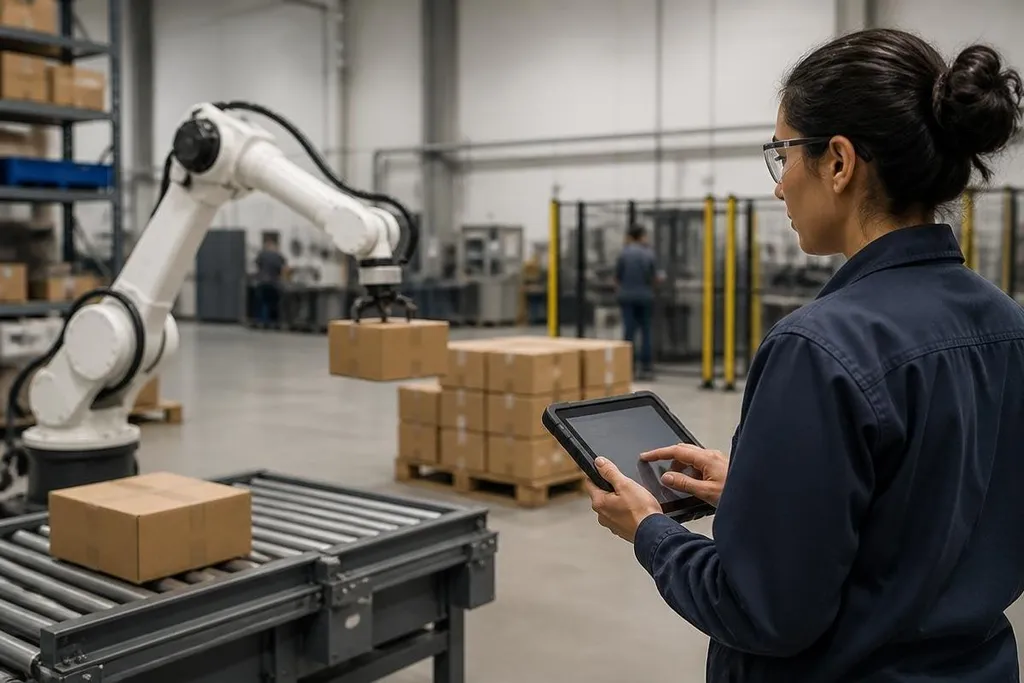
These machines can move a box, inspect a weld, or carry parts through a factory. The less visible work sits around those tasks: teaching the system, checking its decisions, and fixing the process when the real world breaks the plan.
This article looks at the job types that could grow around those gaps. The names are proposals, not established job titles, so the useful question is what each person would do.
- Robot task designer: turns a human work step into instructions a robot can follow.
- Fleet safety technician: checks several robots, their warning systems, and the areas where people work beside them.
- Robot process analyst: studies failed tasks and changes the work setup rather than blaming the machine.
Robots leave work around the work
Each system needs a defined task. Someone has to decide where it starts, what it should pick up, how it should react to an object in the wrong place, and when a person must take control.
That work could form a job built around task design. The person may use video, sensor data, and operator notes to describe the steps in a way that a robot's software can run. The job would sit between a floor supervisor and a robotics engineer, with less focus on writing control code and more focus on making the task clear.
The same gap appears after installation. A system that works in a test area may meet poor lighting, blocked paths, loose packaging, or a person crossing its route. A site robot analyst could record those failures, find the repeated cause, and change the layout or instructions.
That role matters because a failed task often points to a bad setup, not a broken motor. A person who can read the event log and also understand the work area could fix problems that stay hidden from a software team.
New jobs may grow from supervision
As more robots share one site, one person may watch several systems instead of standing beside one machine. That does not remove human work. It changes the work toward alerts, handoffs, safety checks, and decisions about when a robot should stop.
A fleet safety technician could check emergency stops, warning lights, restricted areas, and the rules for human access. They might also review near misses and update the response plan. The job needs machine knowledge, but it also needs careful attention to how people move through the site.
Teleoperation is another possible source of work. When a robot cannot finish a task, a remote operator can guide its arm or body through the difficult part. Over time, those interventions could form a record of tasks that need better software, new gripper designs, or a different work layout.
As these systems enter paid work, robotics coverage from Robot24.com can track what each machine does and where a person takes over. That record matters because job titles will follow the limits of the hardware and software.
The job names will follow the limits
The first version of a new role may look less technical than its name suggests. A robot process analyst could spend much of the day reviewing failed picks. A task designer could spend more time asking workers how they handle damaged parts than changing code.
Pay, training, and responsibility will matter. A worker asked to supervise ten mobile robots needs clear authority to stop them, a safe way to report faults, and training that matches the risks. A title alone does not make that work skilled or well paid.
The strongest case for new jobs comes when people handle tasks robots still do poorly. Those tasks include unusual objects, changing spaces, safety decisions, and work that depends on local knowledge.
The open question is whether companies will hire people for that work or add it to existing jobs without changing pay or staffing.
A practical test for a new robotics role
Before calling a task a new job, check these points:
- Name the machine: record the robot model, work area, and task it handles.
- Count the handoffs: list every point where a person must check, guide, or stop the system.
- Record the failure: save the reason for each pause, such as an object outside the robot's expected shape.
- Set authority: state who can stop the robot and who can approve a restart.
- Measure the workload: track how many alerts, reviews, and site changes one person handles in a shift.
This test separates a real role from a title placed on old work. It also shows where training should start.
I'd support these jobs only when companies give people time, authority, and pay for the decisions they make. Robotics may create work no one has named yet, but those roles will become real only when a machine's limits produce a clear human duty.